




Are 1kg Increment Dumbbells Worth It? 1kg vs 2kg vs 4kg Steps Compared
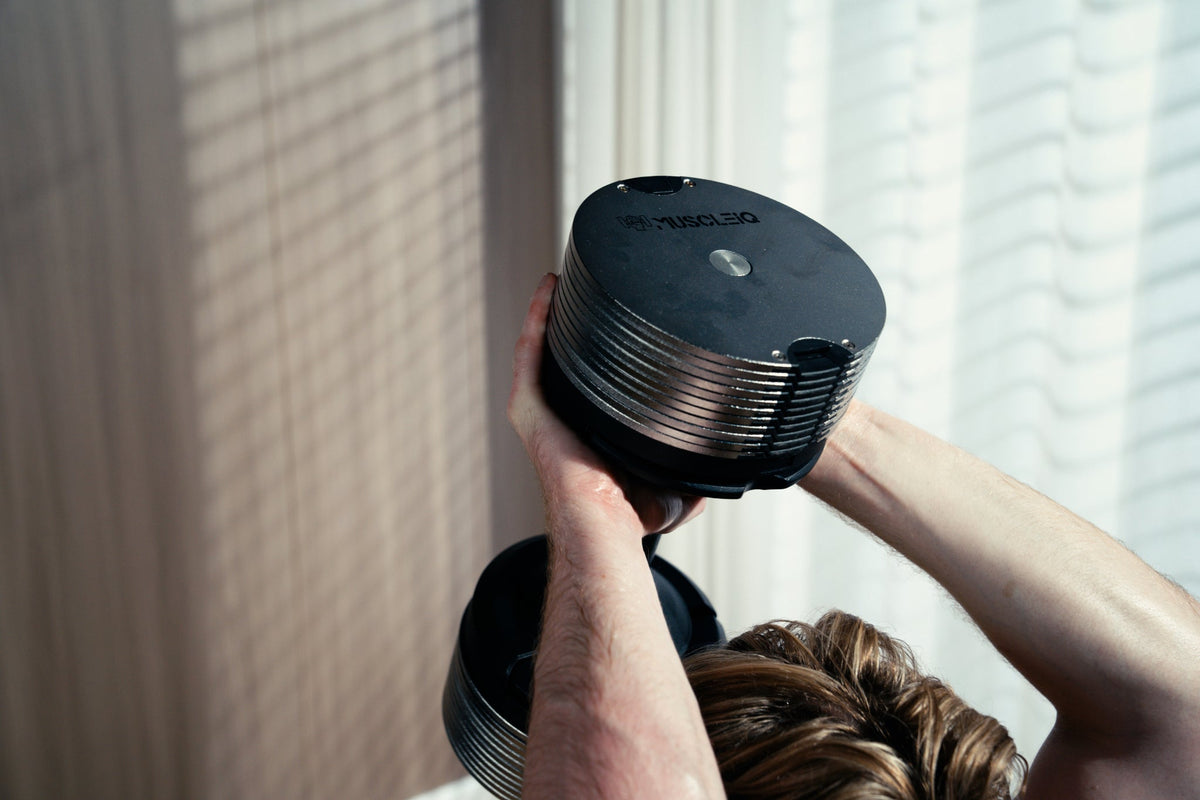
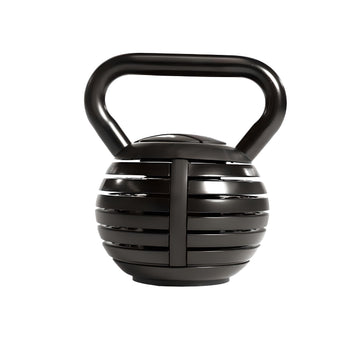
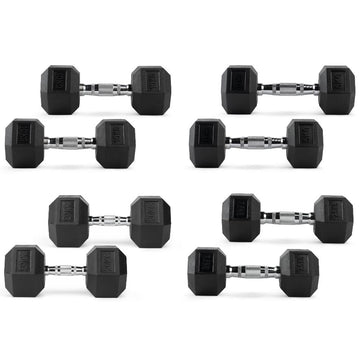
Most adjustable dumbbells go up in 2kg, 2.5kg or 4kg steps. 1kg increment dumbbells go up one kilo at a time. They cost a bit more, so are they worth it? It depends on what you train and how quickly you want to progress. This guide compares all three step sizes side by side, using our own range, so you can choose the right pair first time.
The short answer
- Choose 1kg steps if you train shoulders and arms, you're a beginner, or more than one person will use the pair. You'll progress more often and get stuck less.
- Choose 2kg steps if you want a balance of price and control for general home training.
- Choose 4kg steps if you mostly do big lifts like squats, rows and presses and want the lowest price per kilo.
1kg vs 2kg vs 4kg: side by side
| 1kg steps | 2kg steps | 4kg steps | |
|---|---|---|---|
| 24kg pair | £359.99 | £233.99 | £214.99 |
| 32kg pair | £387.99 | £309.99 | £259.99 |
| 40kg pair | £424.99 | £369.99 (2.5kg steps) | £329.99 |
| Best for | Shoulders, arms, beginners, sharing | All-round home training | Heavy compound lifts |
| How often you can move up | Most weeks | Every few weeks | Less often, with bigger jumps |
Prices are for the dumbbells only, without a bench or stand.
Why the step size matters more on small exercises
The same jump feels very different depending on the exercise. Adding 4kg to a goblet squat is manageable. Adding 4kg to a lateral raise is often impossible.
| Exercise | Typical working weight | +1kg | +2kg | +4kg |
|---|---|---|---|---|
| Lateral raise | 6kg | +17% | +33% | +67% |
| Bicep curl | 10kg | +10% | +20% | +40% |
| Shoulder press | 16kg | +6% | +13% | +25% |
| Goblet squat | 24kg | +4% | +8% | +17% |
Most people can handle a jump of about 5–10%. Above that, reps drop off and progress stalls. That's why 1kg steps make the biggest difference on shoulders and arms, and the least on heavy leg work.
For more on why smaller jumps help, read How the Right Dumbbell Increments Build Strength Safely and What Is Microloading?
Who 1kg increment dumbbells are worth it for
- Beginners: you'll get stronger quickly, and 1kg steps let you keep adding weight for months without hitting a wall.
- Shoulder and arm training: lateral raises, curls, triceps work and rear delts are where big jumps hurt most.
- Couples and families sharing one pair: each person can set their own weight exactly, not "near enough".
- Long-term, steady training: if you want gradual, controlled progress with less risk of overdoing it, small steps help.
When 2kg or 4kg steps make more sense
- You mainly lift heavy: on squats, lunges, rows and presses, a 2–4kg jump is a small percentage, so bigger steps work fine.
- Budget comes first: a 24kg pair with 4kg steps is £145 cheaper than the 1kg version.
- You change weight a lot mid-workout: bigger steps mean fewer clicks to get from light to heavy.
Which size: 24kg, 32kg or 40kg?
Our 1kg increment dumbbells come in 24kg, 32kg and 40kg pairs.
- 24kg: for mostly upper-body work.
- 32kg: suits most home gyms.
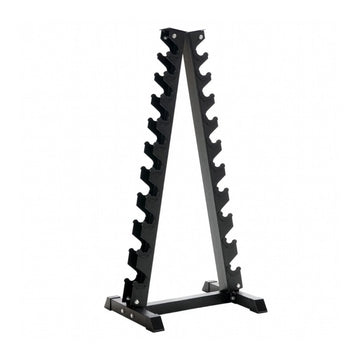
- 40kg: for heavier leg work, or two people sharing.
If you're between sizes, go up one, because most people outgrow 24kg on squats and rows. Not sure? See our guide to what weight dumbbells beginners should start with.
How the 1kg dial works
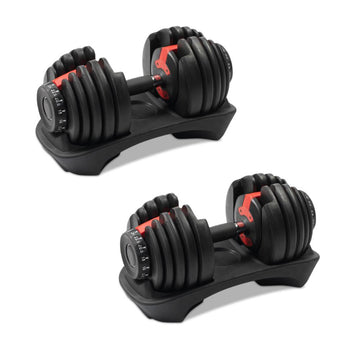
Rest the dumbbell in its base and turn the handle to the weight you want. The plates you don't need stay locked in the base. This twist-in-the-base handle is our own patented design. There are no pins, collars or loose plates, and changing weight takes seconds between sets. Want to keep them at waist height? Add a dumbbell stand.
Frequently asked questions
Are 1kg increment dumbbells worth the extra money?
Yes, if you train shoulders and arms, are a beginner, or share the pair. If you mainly lift heavy on big exercises, 2kg or 4kg steps are better value.
Is the 1kg step per dumbbell or per pair?
Per dumbbell. Each dumbbell goes up 1kg at a time.
Are 1kg dumbbells slower to adjust?
No. You still turn the handle once to any weight. You just have more weights to choose from.
What's the lightest weight on the 1kg dumbbells?
3kg per dumbbell on the 40kg pair, rising 1kg at a time up to 40kg.
Can I upgrade from 24kg to 40kg later?
You'd need to buy a new pair. If you think you'll outgrow 24kg, start with 32kg or 40kg.
Are 2kg increments good enough?
For most people, yes, especially on bigger exercises. 1kg steps help most on small-muscle exercises where 2kg is still a big jump.
Shop all adjustable dumbbells or compare our best adjustable dumbbells UK guide.


